Born in the USSR in 1970, Russian by both nationality and ethnicity, and as such, have my own opinion on everything. People, just try to think different. Maybe it won't make you happier, but the world will be a much better place to live in, if populated by thinking people.
Showing posts with label me & my background. Show all posts
Sunday, October 11, 2015
Friday, August 21, 2015
It's My Life
Being born in 1970, for the first 21 years of my life I was a Soviet citizen, that is, a citizen of the USSR. As such, I went through all the stages form an infant to schoolchildren to a conscripted soldier to a University student — the Soviet way. Surely and undoubtedly, this background has much to do with who I am now. And many of my compatriots who have gone through more or less the same way.
My friend Phil Butler insisted I had to share the experiences of my life. I did.
My sincere hope is that it helps our so sadly imperfect world to be a friendlier place.
Because mutual understanding is the first and maybe the most important key to peaceful coexistence. We are all different — but that's normal, just natural. And the world evidently needs more tolerance. Not just that to sexual choices, but a wider one — to ideas, ways of life, traditions and beliefs, so far these do not threaten other people and nations.
I did not include all the details in my text: it is an online article, not a kind of "War And Peace". But in case you have any questions, or you'd like me to throw more light on this or that part of our former life, feel free to ask. You can also get some more information about me in some of my posts here, tagged "me & my background".
I am here (and there, in the "Our Russia") to answer. To build up understanding.
My friend Phil Butler insisted I had to share the experiences of my life. I did.My sincere hope is that it helps our so sadly imperfect world to be a friendlier place.
Because mutual understanding is the first and maybe the most important key to peaceful coexistence. We are all different — but that's normal, just natural. And the world evidently needs more tolerance. Not just that to sexual choices, but a wider one — to ideas, ways of life, traditions and beliefs, so far these do not threaten other people and nations.
I did not include all the details in my text: it is an online article, not a kind of "War And Peace". But in case you have any questions, or you'd like me to throw more light on this or that part of our former life, feel free to ask. You can also get some more information about me in some of my posts here, tagged "me & my background".
I am here (and there, in the "Our Russia") to answer. To build up understanding.
Monday, February 16, 2015
Dresden Bombing and a Sudden Discovery
I started February 15 with watching a documentary on the ill-famed bombing of Dresden, that happened 70 years ago, on February 13 to 15, 1945. Whatever they write, for me and many of my compatriots it seems that there was no direct warfare necessity in that bombing; hundreds of the RAF and USAAF heavy bombers destroyed the city by a skillfully created firestorm as a sign to Stalin showing the might of the UK and the USA joint forces. Wise guys from the West foresaw the coming cold war and prepared to it.
Anyhow, here is the film I found in a publication of The Vineyard of the Saker.
I have to note that I disagree with many statements that sound in the film. The official figure of the killed during the bombings confirmed by the German authorities in 2005 is from 22,700 up to 25,000; this is an unimaginably huge quantity of dead people and a great tragedy, but in fact it is way less than the deathcount of Hiroshima and Nagasaki nuke bombings in August that year. And it is about two times less than the number of lives taken away by the firestorm the Luftwaffe arranged in Stalingrad on August 23, 1942, mostly civilians, including refugees fleeing from the advancing German, Italian and Romanian troops (situation close to that 2.5 years later in Dresden, when the wheel of history turned in the opposite direction).
Anyhow, here is the film I found in a publication of The Vineyard of the Saker.
I have to note that I disagree with many statements that sound in the film. The official figure of the killed during the bombings confirmed by the German authorities in 2005 is from 22,700 up to 25,000; this is an unimaginably huge quantity of dead people and a great tragedy, but in fact it is way less than the deathcount of Hiroshima and Nagasaki nuke bombings in August that year. And it is about two times less than the number of lives taken away by the firestorm the Luftwaffe arranged in Stalingrad on August 23, 1942, mostly civilians, including refugees fleeing from the advancing German, Italian and Romanian troops (situation close to that 2.5 years later in Dresden, when the wheel of history turned in the opposite direction).
Monday, January 12, 2015
In Memoriam to My Father
Yesterday it was 6 years since that mournful day when my beloved father Vladimir T. Samarin had passed away.
He was born in London, as his father, my grandad, worked there as a Red Army officer in the Soviet military mission during the WW2 and after. Maybe, the very first childish experiences made him to devote his life to English language. For many years he worked as a translator and interpreter for the former Soviet Ministry of Foreign Trade. He visited maybe 70, maybe 80 countries of the world.
He helped people and countries to understand each other better, and to do better business together. It was dozens times with his assistance, that our Soviet political and economy figures talked to Margaret Thatcher (even before she became that 'Iron Lady'), Rockfellers, Armand Hammer, William Verity Jr. and many, many other from (and in) many countries of the world.
I am sure it was thanks to him that I started mastering foreign languages myself. My English is definitely not that perfect. Yet I hope my writings here are serving the same purpose: helping people to understand each other better.
It does matter if we want to leave green Earth, clean water and clear blue sky to our children, grandchildren, etc.
All images from my family archive are taken supposedly by official photographers for either the Ministry of Foreign Trade of the USSR, or the TASS or APN news agencies.
![]() |
| Vladimir T. Samarin (13.08.1945—11.01.2009) in 1980 |
A biography personally signed by Armand Hammer (in Russian) to my father.
He helped people and countries to understand each other better, and to do better business together. It was dozens times with his assistance, that our Soviet political and economy figures talked to Margaret Thatcher (even before she became that 'Iron Lady'), Rockfellers, Armand Hammer, William Verity Jr. and many, many other from (and in) many countries of the world.
Left: My father helps the Soviet power to talk with William Verity Jr. (left), about 1982;
Right: the top of his career as an interpreter was achieved on October 13, 1980: he assisted to Brezhnev.
I am sure it was thanks to him that I started mastering foreign languages myself. My English is definitely not that perfect. Yet I hope my writings here are serving the same purpose: helping people to understand each other better.
It does matter if we want to leave green Earth, clean water and clear blue sky to our children, grandchildren, etc.
All images from my family archive are taken supposedly by official photographers for either the Ministry of Foreign Trade of the USSR, or the TASS or APN news agencies.
Saturday, December 13, 2014
Two Pictures From My Family Album
Looking through your family archives and albums (or shoeboxes) can lead to pretty interesting discoveries.
My grandfather Timofey (Timoty) Timofeyevich Samarin was an officer of the Red Army. Due to a perfect knowledge of English he served in London from 1943 to 1949 and took a position of air assistant to military attaché and ambassador of the USSR to the UK (being a 1937 graduate of the Zhukovsky Airforce Academy, he was an aircraft engineer and designer by his military education).
And he was a member of Soviet delegations to after-war conferences that were intended to establish a new, peaceful post-war world order.
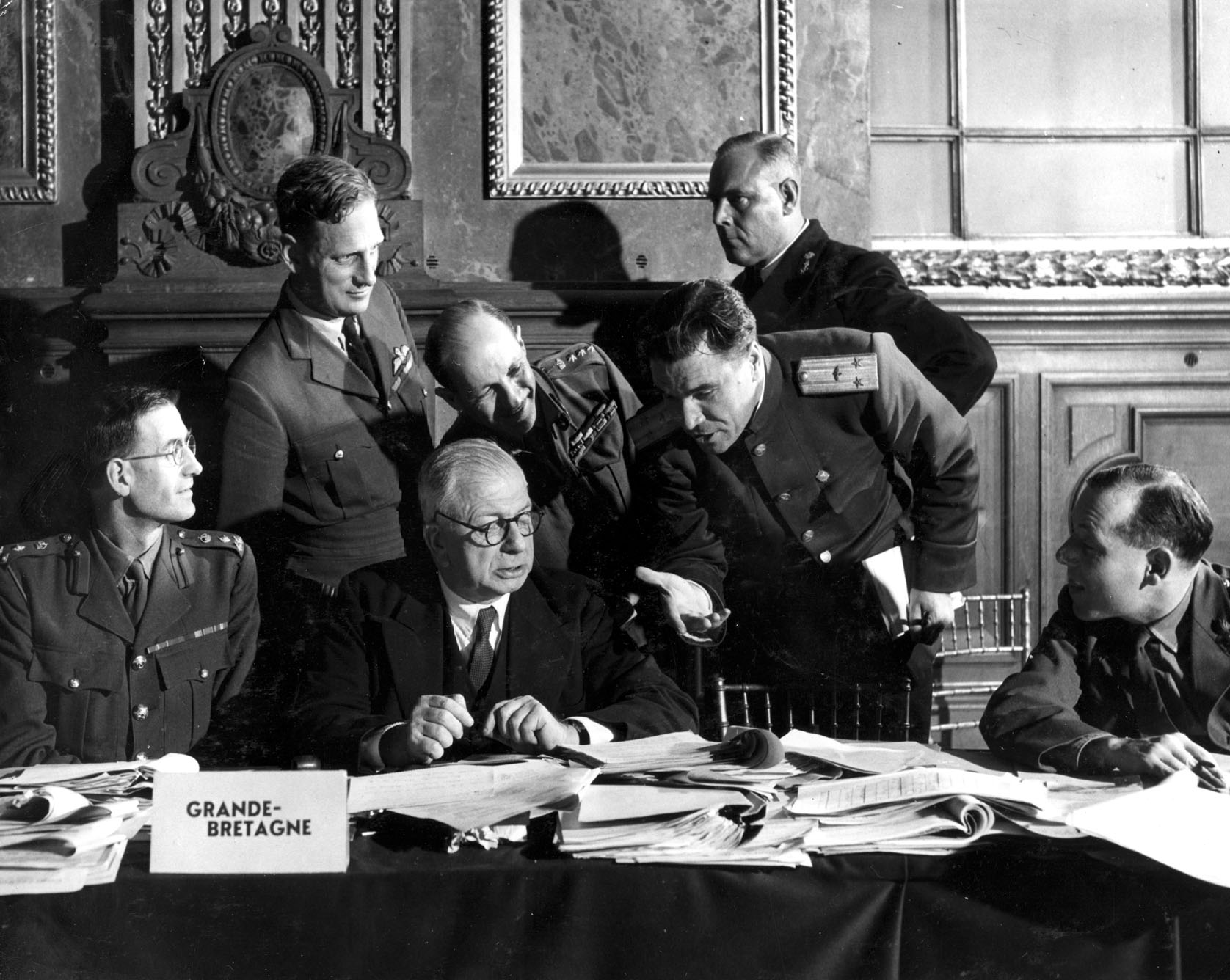
Here are just two images from his album, taken during the Paris Peace Conference (29 July to 15 October, 1946). The main aim of the conference was inclusion of former Nazi Germany allies, namely Bulgaria, Finland, Hungary, Italy and Romania, into the post war world order. The resulted treaties allowed these countries to keep their sovereignty and become members of the UN.
Captions are just like my granddad wrote them down (in my translation).
This very Soviet colonel-lieutenant, explaining to Albert Victor Alexander, 1st Earl Alexander of Hillsborough, that Greece has no grounds to claim the Rhodopes, is my grandfather.
These wonderful images were taken by Gjon Mili, who worked for the Life since 1939 till his death in 1984. In 1958 the American magazine "Popular Photography" included Gjon in the list of the 10 best photographers of the present time.
The 2nd picture is signed by the author: "To Col. Samarine with my very best wishes. Gjon Mili".
I feel really sorry that my granddad passed away in 1980, when I was still too young to ask him questions and understand answers. Anyhow, enjoy the images. This is the real art of photographic journalism indeed!
This publication is my little contribution to the fact that the USSR was standing for the countries it considered its allies. Until now, such countries as Bulgaria, Lithuania, Poland have pretty thick grounds to be thankful to the Soviet Union in general and its wartime leader Stalin in particular.
Please do not forget that:
Images by Gjon Mili © Time Inc. Used with permission.
Right owner prohibits any commercial use of the images and asks me to restrict their republication.
My grandfather Timofey (Timoty) Timofeyevich Samarin was an officer of the Red Army. Due to a perfect knowledge of English he served in London from 1943 to 1949 and took a position of air assistant to military attaché and ambassador of the USSR to the UK (being a 1937 graduate of the Zhukovsky Airforce Academy, he was an aircraft engineer and designer by his military education).
And he was a member of Soviet delegations to after-war conferences that were intended to establish a new, peaceful post-war world order.
Here are just two images from his album, taken during the Paris Peace Conference (29 July to 15 October, 1946). The main aim of the conference was inclusion of former Nazi Germany allies, namely Bulgaria, Finland, Hungary, Italy and Romania, into the post war world order. The resulted treaties allowed these countries to keep their sovereignty and become members of the UN.
Captions are just like my granddad wrote them down (in my translation).
![]() |
| A representative of Greece lays up a claim to the Rhodopes (Bulgaria). |
![]() |
| Elucidation of Alexander, the First Lord of the Admiralty, that Greek solicitations are groundless. |
These wonderful images were taken by Gjon Mili, who worked for the Life since 1939 till his death in 1984. In 1958 the American magazine "Popular Photography" included Gjon in the list of the 10 best photographers of the present time.
The 2nd picture is signed by the author: "To Col. Samarine with my very best wishes. Gjon Mili".
I feel really sorry that my granddad passed away in 1980, when I was still too young to ask him questions and understand answers. Anyhow, enjoy the images. This is the real art of photographic journalism indeed!
This publication is my little contribution to the fact that the USSR was standing for the countries it considered its allies. Until now, such countries as Bulgaria, Lithuania, Poland have pretty thick grounds to be thankful to the Soviet Union in general and its wartime leader Stalin in particular.
Please do not forget that:
Images by Gjon Mili © Time Inc. Used with permission.
Right owner prohibits any commercial use of the images and asks me to restrict their republication.
Wednesday, December 10, 2014
Is the Russian Winter Still Russian?
I remember the good old times, when any winter was a real Russian snowy and frosty winter. These happened to be so snowy and frosty that you might still believe General Frost had really helped the Red Army to defend Moscow from Germans back in 1941.
I don't know who is to blame, either those sanctions against Russia, or that independent El-Niño, or whatever natural (or unnatural) phenomenon else. What I know (and see with my own eyes, and feel with my own body) for sure, our Russian winter is not what it used to be.
When a child, in winter I enjoyed plenty of snow! Since early childhood the most wanted toy for walks was a little shovel. Snow banks and piles were often full (grown-up) human length high. Snowballs were our outdoor game number one, and there were lots of snowmans (and snowwomen!) around there. And -20 centigrade was normal, while -30 was considered as quite a minor disaster ('cause sometimes temperature could fall to -35 and even lower), and schoolchildren were allowed to stay at home if it was -28 and lower.
And what we have now? Now we have the first somewhat real snowfall in Moscow on December, 10, and the temperature about -2 centigrade!


That's hilarious and ridiculous! Give back our winter without that dark-brown muddy pap on the roads!
I don't know who is to blame, either those sanctions against Russia, or that independent El-Niño, or whatever natural (or unnatural) phenomenon else. What I know (and see with my own eyes, and feel with my own body) for sure, our Russian winter is not what it used to be.
![]() |
| 1975. Guess why my cheeks are red just like the handle of my little shovel! |
![]() |
| Only trees and bushes look like in the good old times. |


That's hilarious and ridiculous! Give back our winter without that dark-brown muddy pap on the roads!
Tuesday, December 09, 2014
23 Years Without the USSR
23 years ago, on December 8, 1991, Ukrainian President Leonid Kravchuk, Chairman of the Supreme Council of the Republic of Belarus Stanislav Shushkevich and President of Russia Boris Yeltsin signed so called Belovezha Accords, which put an end to about 70 years of the history of the USSR.
My personal feeling does not principally differ from that of our President Putin; I do think this was a real geopolitical catastrophe. It led to hundreds of thousands of deaths both from firearms and starvation. Aftershocks of this catastrophe are still shaking the world, but this is not that the very point I'd like to talk about.
I'd like to remind one event that took place about 9 months before Belovezha, namely, on March 17, 1991.
There was a referendum on the future of the USSR, and the question read:
The total amount of registered voters, that is electorate, was more than 185,6 millions.
Five republics of the USSR, namely Estonia, Latvia, Lithuania, Moldova (except for Transnistria) and Georgia (except for Abkhazia and South Ossetia) boycotted the referendum.
Nevertheless, more than 148,5 mil. people gave accepted votes, about 80% of registered electorate. 2,7 mil. people more spoiled their papers or left them blank.
There were 32,3 mil. votes (22,2%) against the Soviet Union, and 113,5 mil. of Soviet citizens (77,8%) voted for. One hundred and thirteen point five million votes. Clear majority.
What is a referendum? Isn't it the absolute way of direct democracy, when people express their will directly? Definitely so; it's way more democratic in comparison, say, to presidential elections in the USA.
If we lived in a truly democratic world, the openly expressed opinion of Soviet people (at least of 10 republics, including Russia, Ukraine and Belarus) should be respected.
Nine months later the Union of Soviet Socialist Republics was killed by leaders of three republics that were the very core of the USSR. The fourth biggest and strongest republic of Kazakhstan had nothing to do but to accept the news.
Democracy, you say? Forget about it; it's just a fairy tale for romantic students and popular masses.
P.S.: As for me personally, I was too young then and gave too much weight to my personal opinions, not realizing some of them were artificially created by a heavy anti-Soviet propaganda; I considered the question of referendum wrongly formulated and took the paper with me. Now I feel shame that my vote is missing from those 113,5 mil. votes.
Though I understand it means nothing.
| “Signing the Agreement to eliminate the USSR and establish the Commonwealth of Independent States”. Viskuly Government House in the Belorusian National Park "Belovezhskaya Forest". U.Ivanov/Ю.Иванов - RIA Novosti; from Wikipedia. |
My personal feeling does not principally differ from that of our President Putin; I do think this was a real geopolitical catastrophe. It led to hundreds of thousands of deaths both from firearms and starvation. Aftershocks of this catastrophe are still shaking the world, but this is not that the very point I'd like to talk about.
I'd like to remind one event that took place about 9 months before Belovezha, namely, on March 17, 1991.
| Voting paper of March 17, 1991 referendum. |
There was a referendum on the future of the USSR, and the question read:
Do you consider necessary the preservation of the Union of Soviet Socialist Republics as a renewed federation of equal sovereign republics in which the rights and freedom of an individual of any nationality will be fully guaranteed?
The total amount of registered voters, that is electorate, was more than 185,6 millions.
Five republics of the USSR, namely Estonia, Latvia, Lithuania, Moldova (except for Transnistria) and Georgia (except for Abkhazia and South Ossetia) boycotted the referendum.
Nevertheless, more than 148,5 mil. people gave accepted votes, about 80% of registered electorate. 2,7 mil. people more spoiled their papers or left them blank.
There were 32,3 mil. votes (22,2%) against the Soviet Union, and 113,5 mil. of Soviet citizens (77,8%) voted for. One hundred and thirteen point five million votes. Clear majority.
What is a referendum? Isn't it the absolute way of direct democracy, when people express their will directly? Definitely so; it's way more democratic in comparison, say, to presidential elections in the USA.
If we lived in a truly democratic world, the openly expressed opinion of Soviet people (at least of 10 republics, including Russia, Ukraine and Belarus) should be respected.
Nine months later the Union of Soviet Socialist Republics was killed by leaders of three republics that were the very core of the USSR. The fourth biggest and strongest republic of Kazakhstan had nothing to do but to accept the news.
Democracy, you say? Forget about it; it's just a fairy tale for romantic students and popular masses.
P.S.: As for me personally, I was too young then and gave too much weight to my personal opinions, not realizing some of them were artificially created by a heavy anti-Soviet propaganda; I considered the question of referendum wrongly formulated and took the paper with me. Now I feel shame that my vote is missing from those 113,5 mil. votes.
Though I understand it means nothing.
Friday, December 05, 2014
Russian: What Does It Literary Mean?
In my opinion, an my opinion is based upon not only foreign media, but on numerous personal talks with people in Germany, the UK, the USA and other countries, use of the very word 'Russian' often leads to misunderstanding.
It's like a matryoshka, and talking about Russia (or Ukraine, for the matter) you shouldn't forget about it. The Russians are not only Russians, ok?
By the way, your word 'nationality' is also often confusing for us, being a 'false translator's friend'. The Russian word "национальность" of the same Latin origin means 'ethnicity', not state citizenship. And ethnicity means a lot in such a multi-ethnical country (or empire — I don't care) Russia is.
We have about 100 (one hundred) ethnicities counting more than 100 thousand people each, and in general our last census recorded about 350 ethnicities. Wiki has a good table on the matter. And all these people, being Buryats, Ossetians, Yakuts, Mansi's and many many other names, are Russians by nationality; definitely including close to 80% of Russian Russians.
What is important in all this Ukrainian madhouse spreading its infection worldwide, by the way, is that Ukraine is also a multi-ethnical country, though evidently to a lesser extent than Russia. And with the tiny little history of just 23 years after the disintegration of the USSR; Ukraine never existed as a self-standing independent state before, except for about one year during the bloodiest Civil War which exploded in Russia after Antanta decided to support anti-Bolshevik forces soon after the October Revolution.
Here, I'd like to remind you of a Gallup pool conducted in 2008. It clearly shows that 83% of Ukrainian population preferred to respond in Russian, and only 17% responded in the Ukrainian language. Nevertheless, the Russian language in Ukraine is not official; the language problem, worsened by active, and even aggressive ukrainization, was definitely one which lead the country to the present state of civil war.
So, as for Ukraine, people who are Ukrainians by nationality, can be ethnically Ukrainian speaking Ukrainians, Russian speaking Ukrainians, Russians (by their Ukrainian own census about 8 millions, yet the figure seems to be artificially decreased), and a number of ethnical minorities, including Crimean Tartarts (they have their own Turkic language), Hungarians and many others in Trans-Carpatian region.
So, talking about Russian and Ukrainian problems, you are to clearly understand what you are talking about now: nationality and citizenship, or ethnicity. And the latter issue is not less important on the territory of the former USSR; in Soviet passports there was a special line for ethnicity. Yet, especially in cities with well established industry, there were many interethnical marriages, when the husband could be Russian and wife Ukrainian, or Armenian and Azerbaijani, or Buryat and Komi, or Tartar and Jewish, etc. And it was the parents' joint decision, what ethnicity was to be written into the special field of birth certificates of their children, and later in their passports.
As for me personally, I am definitely Russian, I belong to Russian culture, Russian is my native language. In the time of Russian Empire my ethnicity was called 'Velikoross' (Great Russian), and the biggest were 'Malorossians' ('people of Small Russia', Ukrainians) and 'Belorussians' (people of White Russia'). Yet my blood includes drops of some other ethnicities, as it is common for many of my compatriots. I know that one of my great-grandmothers was a Crimean Tartar. I also can have a tiny little drop of Polish blood: one of my grandfathers came from a village in Ryazan' region of Russia, where captured Polish POWs were forced to settle back in the 17th century, and his family name 'Polyakov' (literally, "of Polish origin") can be a sign of it. But many of my friends and colleagues, and my classmates, and university-mates are and were Russian Armenians, Russian Tartars, Russian Jews, etc.
Just to finish. When the USSR was strong, the ethnical matter meant less; the social lifts were open to all ethnicities, and many colleges and institutes were obliged to teach a certain percentage of students coming fron ethnical minorities. With the disintegration of the USSR, ethnical issue arose in its full strength in some regions, and lead to many mass riots and bloody conflicts, mainly in the Asian and Caucasian parts of former Soviet Union. Who is a current 'nationalist' in Russia (not necessarily Russian ethnically)? The one standing for his (or her) ethnicity, not nationality.
I consider it as a great disaster and civilizational regress, as no ethnicity in my opinion is better than others. My younger son is a sportsman, a figure skater, and a skating rink is a nice place to show who is stronger, quicker and can jump higher. AK-47 is the worst way to prove one's advantage over others.
That's all for now; yet I feel the matter is so important that I will go back to it from time to time to dig some aspects deeper, and sometimes I will definitely touch it in my publications.
It's like a matryoshka, and talking about Russia (or Ukraine, for the matter) you shouldn't forget about it. The Russians are not only Russians, ok?
By the way, your word 'nationality' is also often confusing for us, being a 'false translator's friend'. The Russian word "национальность" of the same Latin origin means 'ethnicity', not state citizenship. And ethnicity means a lot in such a multi-ethnical country (or empire — I don't care) Russia is.
We have about 100 (one hundred) ethnicities counting more than 100 thousand people each, and in general our last census recorded about 350 ethnicities. Wiki has a good table on the matter. And all these people, being Buryats, Ossetians, Yakuts, Mansi's and many many other names, are Russians by nationality; definitely including close to 80% of Russian Russians.
What is important in all this Ukrainian madhouse spreading its infection worldwide, by the way, is that Ukraine is also a multi-ethnical country, though evidently to a lesser extent than Russia. And with the tiny little history of just 23 years after the disintegration of the USSR; Ukraine never existed as a self-standing independent state before, except for about one year during the bloodiest Civil War which exploded in Russia after Antanta decided to support anti-Bolshevik forces soon after the October Revolution.
Here, I'd like to remind you of a Gallup pool conducted in 2008. It clearly shows that 83% of Ukrainian population preferred to respond in Russian, and only 17% responded in the Ukrainian language. Nevertheless, the Russian language in Ukraine is not official; the language problem, worsened by active, and even aggressive ukrainization, was definitely one which lead the country to the present state of civil war.
So, as for Ukraine, people who are Ukrainians by nationality, can be ethnically Ukrainian speaking Ukrainians, Russian speaking Ukrainians, Russians (by their Ukrainian own census about 8 millions, yet the figure seems to be artificially decreased), and a number of ethnical minorities, including Crimean Tartarts (they have their own Turkic language), Hungarians and many others in Trans-Carpatian region.
So, talking about Russian and Ukrainian problems, you are to clearly understand what you are talking about now: nationality and citizenship, or ethnicity. And the latter issue is not less important on the territory of the former USSR; in Soviet passports there was a special line for ethnicity. Yet, especially in cities with well established industry, there were many interethnical marriages, when the husband could be Russian and wife Ukrainian, or Armenian and Azerbaijani, or Buryat and Komi, or Tartar and Jewish, etc. And it was the parents' joint decision, what ethnicity was to be written into the special field of birth certificates of their children, and later in their passports.
As for me personally, I am definitely Russian, I belong to Russian culture, Russian is my native language. In the time of Russian Empire my ethnicity was called 'Velikoross' (Great Russian), and the biggest were 'Malorossians' ('people of Small Russia', Ukrainians) and 'Belorussians' (people of White Russia'). Yet my blood includes drops of some other ethnicities, as it is common for many of my compatriots. I know that one of my great-grandmothers was a Crimean Tartar. I also can have a tiny little drop of Polish blood: one of my grandfathers came from a village in Ryazan' region of Russia, where captured Polish POWs were forced to settle back in the 17th century, and his family name 'Polyakov' (literally, "of Polish origin") can be a sign of it. But many of my friends and colleagues, and my classmates, and university-mates are and were Russian Armenians, Russian Tartars, Russian Jews, etc.
Just to finish. When the USSR was strong, the ethnical matter meant less; the social lifts were open to all ethnicities, and many colleges and institutes were obliged to teach a certain percentage of students coming fron ethnical minorities. With the disintegration of the USSR, ethnical issue arose in its full strength in some regions, and lead to many mass riots and bloody conflicts, mainly in the Asian and Caucasian parts of former Soviet Union. Who is a current 'nationalist' in Russia (not necessarily Russian ethnically)? The one standing for his (or her) ethnicity, not nationality.
I consider it as a great disaster and civilizational regress, as no ethnicity in my opinion is better than others. My younger son is a sportsman, a figure skater, and a skating rink is a nice place to show who is stronger, quicker and can jump higher. AK-47 is the worst way to prove one's advantage over others.
That's all for now; yet I feel the matter is so important that I will go back to it from time to time to dig some aspects deeper, and sometimes I will definitely touch it in my publications.
Thursday, December 04, 2014
Introductory Note
Hello everybody!
First of all, let me introduce myself.
My name — and, as a Russian, I have not only a name, but a patronymic as well — Vladimir Vladimirovich (meaning that my father's name was Vladimir as well). But I am not only a namesake of our President; the same name+patronymic had our famous poet Mayakovsky, writer Nabokov, and many other less known, but respectable persons.
In Russian, familiarly-diminutively they call me Volodya or even Vova, Vovan, Vovik, Vovchik; you, being representatives of a slightly different civilization, can call me Vlad or Mir or even Sam (derived from my family name; BTW, it was my nickname among my university-mates) or how ever else — I don't mind until your giving me names becomes offensive.
I was born in 1970 — while the USSR was strong and atop of one of the two poles of the world. I came home from my military service in 1990 — when USSR was going (or, to be more precise, was lead by some powers) to collapse. I graduated from the Moscow State University; my faculty had its own name — the College (or Institute) of Afro-Asian Studies, and my main subjects were Economics and Afrikaans — so ek kan ook 'n bietjie praat, menere an mevrouens, — in 1995, while the process of destroying the Soviet heritage and building up something new on its remains was on the very go.
I have two children, two wonderful sons of 21 and 16 (at the moment), that is I am also a husband and a father. My younger son Alexander does pretty well in figure skating, so no surprise this sport became one of my biggest interests in life.
As for my job, I started (not alone; with a couple of enthusiastic colleagues) Photomagazin magazine in 1993. It was at the time the only non-governmental magazine on photography and photo equipment, and in 1996 it was the only one, when former "Soviet Photo" died. Since then my job is connected with cameras, lenses, tripods, photographers and related goods and people.
Yet and however, I remain a Russian. And the world has too little knowledge of this particular part of my life.
Having not that bad skills in spoken English, I was invited some times by the BBC to share my views on, let's say, incorporation of Crimea or Victory Parade in Moscow with their radio and TV audience, but one or two minutes af air time is definitely not enought to share all aspects of my thinking, my views, my feelings about the situations.
Recently they wanted me to comment on economic 'crysis' in Russia — and it was kind of a milestone. I have decoded to start my own English language blog, to have a good possibility to share my opinions with everybody who'd like to know.
Since 1991, I do not belong to any political party or movement, I am a trade journalist in the field of photography, but my job never urged me to express my political views or comments. This blog is my entirely and absolutely private project. I am not supported, or funded, or somehow sponsored by any political body, party, institution or government.
Whether you enjoy it or not — just be polite; I always have reasons to say what I say. I will definitely ban for offenses.
I do not promise to tolerate everything; yet I will try to do my best in responding to your questions. Ask me whatever you'd like to know abour Moscow (my home city), Russia, our Russian ideas, feelings, words, etc.
Let's do the world a better known and mutually understandable place together. It's the place our children and grandchildren have to live in. So let us help them.
I do hope my voice won't remain the one crying in the wilderness, supposedly the world is to a certain extent civilized indeed, and able (though seemingly seldom) to solve matters using the power of words instead of weapons.
PS: Just for your information: I include a small set of my personal images, so that you have a better understanding that I am a real world person, not just a set of letters on the screen of your gadget.
PPS: I have a blog in Russian; I write there what I feel is important to me, to Muscovites (as Moscow is my native and home city) and to my compatriots, Don't be jealous; if you want to read what I write there — please be so kind to learn Russian; it's definitely difficult but not more than English was for me (and it was not the only one I learned, you know).
PPPS: I know my English is not perfect, it is not my native tongue. Yet I hope it is quite understandable. However if I have failed to express a thought in a proper way, let me know about it and I try gratefully to correct or improve my texts.
First of all, let me introduce myself.
My name — and, as a Russian, I have not only a name, but a patronymic as well — Vladimir Vladimirovich (meaning that my father's name was Vladimir as well). But I am not only a namesake of our President; the same name+patronymic had our famous poet Mayakovsky, writer Nabokov, and many other less known, but respectable persons.
In Russian, familiarly-diminutively they call me Volodya or even Vova, Vovan, Vovik, Vovchik; you, being representatives of a slightly different civilization, can call me Vlad or Mir or even Sam (derived from my family name; BTW, it was my nickname among my university-mates) or how ever else — I don't mind until your giving me names becomes offensive.
I was born in 1970 — while the USSR was strong and atop of one of the two poles of the world. I came home from my military service in 1990 — when USSR was going (or, to be more precise, was lead by some powers) to collapse. I graduated from the Moscow State University; my faculty had its own name — the College (or Institute) of Afro-Asian Studies, and my main subjects were Economics and Afrikaans — so ek kan ook 'n bietjie praat, menere an mevrouens, — in 1995, while the process of destroying the Soviet heritage and building up something new on its remains was on the very go.
I have two children, two wonderful sons of 21 and 16 (at the moment), that is I am also a husband and a father. My younger son Alexander does pretty well in figure skating, so no surprise this sport became one of my biggest interests in life.
As for my job, I started (not alone; with a couple of enthusiastic colleagues) Photomagazin magazine in 1993. It was at the time the only non-governmental magazine on photography and photo equipment, and in 1996 it was the only one, when former "Soviet Photo" died. Since then my job is connected with cameras, lenses, tripods, photographers and related goods and people.
Yet and however, I remain a Russian. And the world has too little knowledge of this particular part of my life.
Having not that bad skills in spoken English, I was invited some times by the BBC to share my views on, let's say, incorporation of Crimea or Victory Parade in Moscow with their radio and TV audience, but one or two minutes af air time is definitely not enought to share all aspects of my thinking, my views, my feelings about the situations.
Recently they wanted me to comment on economic 'crysis' in Russia — and it was kind of a milestone. I have decoded to start my own English language blog, to have a good possibility to share my opinions with everybody who'd like to know.
Since 1991, I do not belong to any political party or movement, I am a trade journalist in the field of photography, but my job never urged me to express my political views or comments. This blog is my entirely and absolutely private project. I am not supported, or funded, or somehow sponsored by any political body, party, institution or government.
Whether you enjoy it or not — just be polite; I always have reasons to say what I say. I will definitely ban for offenses.
I do not promise to tolerate everything; yet I will try to do my best in responding to your questions. Ask me whatever you'd like to know abour Moscow (my home city), Russia, our Russian ideas, feelings, words, etc.
Let's do the world a better known and mutually understandable place together. It's the place our children and grandchildren have to live in. So let us help them.
I do hope my voice won't remain the one crying in the wilderness, supposedly the world is to a certain extent civilized indeed, and able (though seemingly seldom) to solve matters using the power of words instead of weapons.
PS: Just for your information: I include a small set of my personal images, so that you have a better understanding that I am a real world person, not just a set of letters on the screen of your gadget.
![]() |
| I and my younger sister in the countryside ('dacha') near Moscow; judging by her size & pram, it is the sunny summer of 1978. |
![]() |
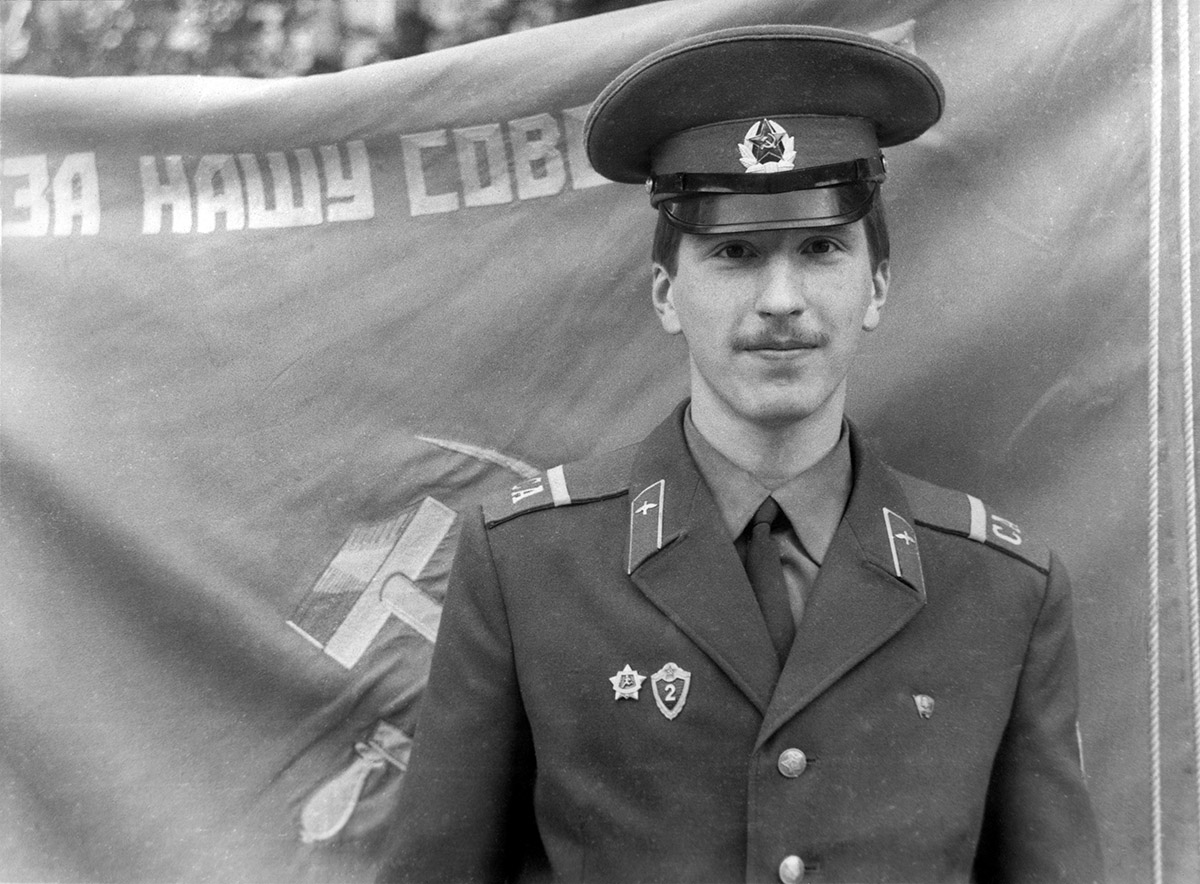
| I was a good soldier in 1990; a picture with the regiment's banner as a background was an official encouragement. |
I am on air of the BBC World News' "World Have Your Say", March 2014, talking about Crimea.
Yes, I'm proud, by the way.
PPS: I have a blog in Russian; I write there what I feel is important to me, to Muscovites (as Moscow is my native and home city) and to my compatriots, Don't be jealous; if you want to read what I write there — please be so kind to learn Russian; it's definitely difficult but not more than English was for me (and it was not the only one I learned, you know).
PPPS: I know my English is not perfect, it is not my native tongue. Yet I hope it is quite understandable. However if I have failed to express a thought in a proper way, let me know about it and I try gratefully to correct or improve my texts.
Subscribe to:
Posts (Atom)